Start with the boring explanations
Wood swells in humid air, and a Tennessee Valley summer has plenty of it. A door that binds from June to September and swings freely by November is reacting to moisture, not to the foundation. Fresh paint on the edge of a door, a loose top hinge and a strike plate that was never set right all produce the same complaint.
Windows have their own ordinary faults: painted-shut sashes, broken balances, vinyl frames bowed by a badly foamed gap. None of these is foundation work.
A ten-minute check you can do yourself
This does not tell you what is wrong. It gives the company you call something useful to go on.
Look at the gap, not the door
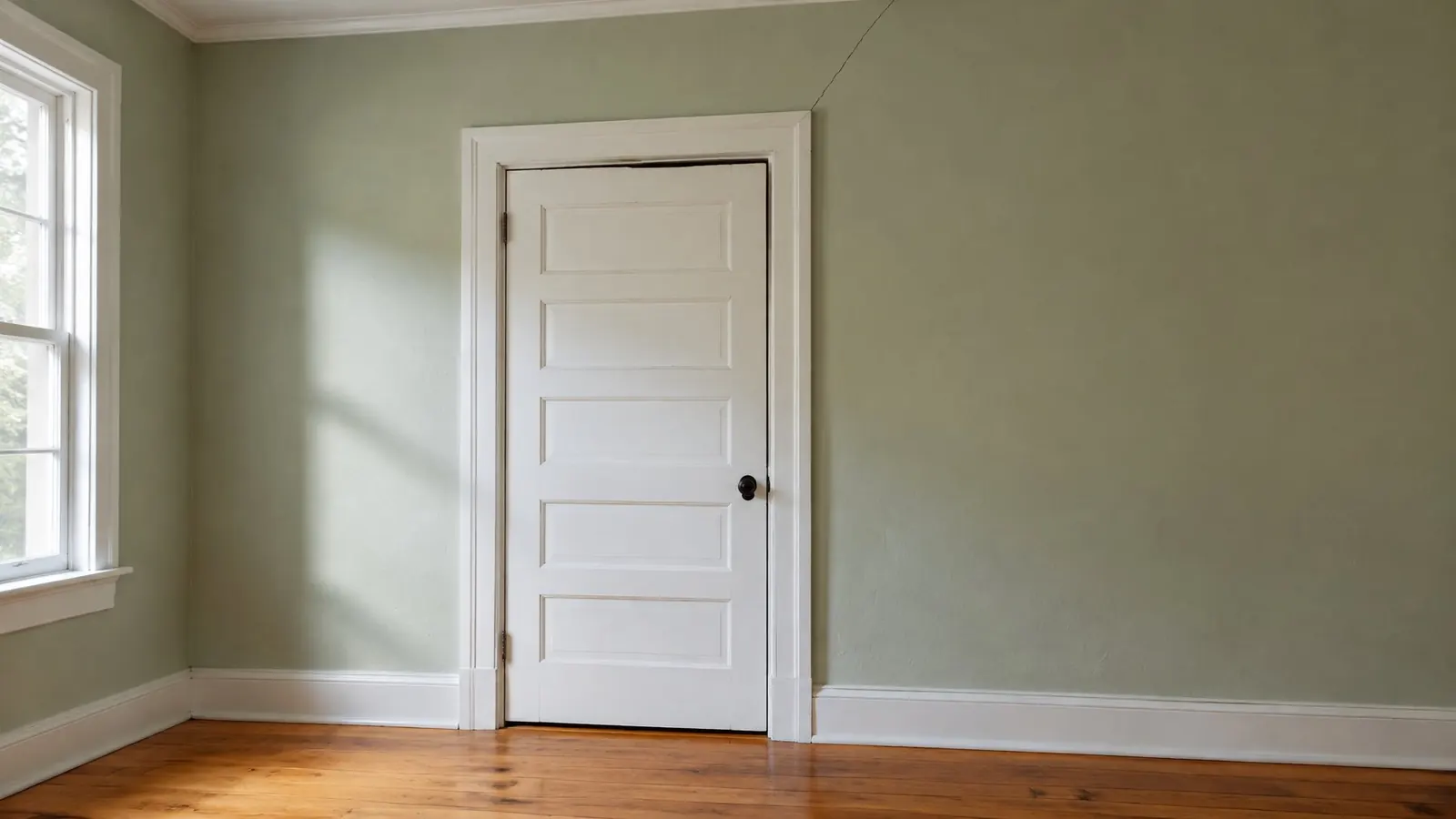
Close the door and study the space between it and the frame. An even gap all round means the frame is still square. A gap that tapers, wide at one top corner and tight at the other, means the frame has racked.
Find which way it leans
The tight corner points toward the part of the floor that is lower. Do the same for two or three doors and see whether they agree.
Check the wall above
A diagonal crack rising from the top corner of the frame, on the same side as the wide gap, belongs to the same movement.
Write down the season
Note the month and whether it has been wet or dry. If the door behaves differently in six months, tell the inspector.
What the pattern suggests
Points toward the structure
- Several doors in one area leaning the same way
- Latches that have drifted up or down from their strike plates
- New cracks above the frames, or trim pulling apart at the miters
- A floor you can feel sloping as you walk toward that wall
Points away from it
- One door only, in a bathroom or laundry
- Trouble that comes and goes with the humidity
- A door that was trimmed or rehung after new flooring
- Exterior doors that swell on the weather side after rain
In a crawl space house, look down before you look out
Many of Chattanooga's older houses stand on a crawl space, with the floor carried by a center beam on masonry piers. When one of those piers sinks or a beam sags, interior doors over that line go out of square while the outside walls stay exactly where they were. The fix is under the floor, and it is described on the crawl space repair page.
When the doors that stick are on an outside wall, and the brick outside shows cracks on that side too, the perimeter footing is the more likely place to look.
What gets measured
During an inspection the company maps floor heights across the house with a level that reads to a fraction of an inch. The map shows whether the low spot is in the middle, which suggests the floor framing, or along an edge, which suggests the footing. Ask to see the readings and keep a copy. They are the baseline for judging any future change.