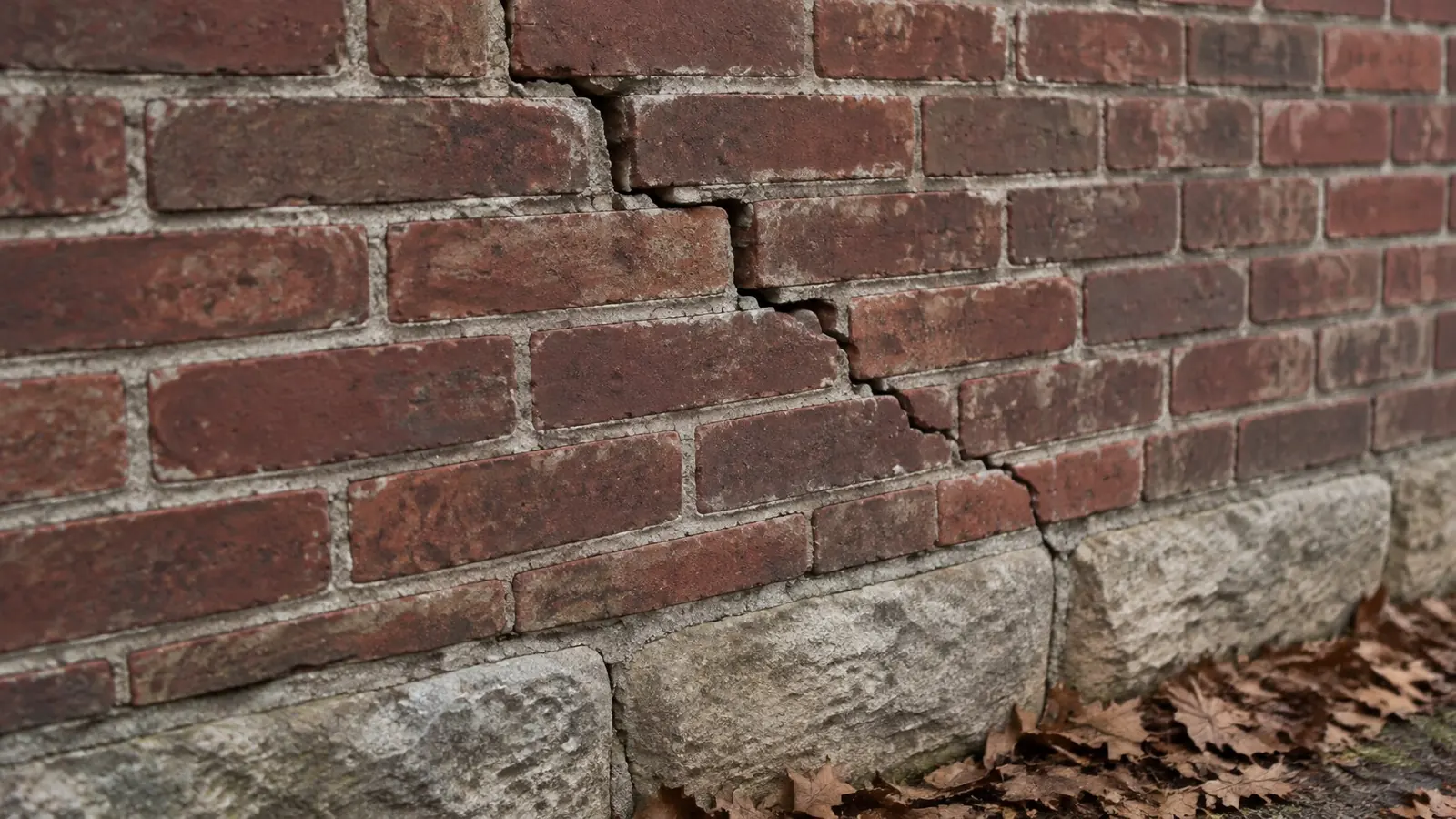
Read the crack before you worry about it
Brick and block crack along the mortar because mortar is the weaker material. When one part of a wall drops a little and the rest stays put, the break steps down through the joints like a staircase. Inside, the same movement shows as a diagonal crack leaving the top corner of a door or window.
Three details tell an inspector far more than the crack's length:
- Shape. A crack that is wider at one end than the other shows which way that part of the house has rotated.
- Offset. Run a finger across it. If one side stands proud of the other, the wall has moved out of plane as well as apart.
- Change. A crack that was patched and has reopened, or that has grown since last year, is active. One that has sat unchanged for ten years is a record of something that has finished.
Settlement, or something else?
Often goes with foundation movement
- Stair-step cracks in brick wider than a pencil lead, wider at the top
- Cracks on the outside that line up with cracks inside the same wall
- A gap opening between brick and a window frame or the trim
- Doors nearby that have started to rub at the same time
Often has another cause
- Hairline cracks at the seams of drywall sheets, straight and even
- A single crack along the ceiling where an addition meets the old house
- Fine vertical cracks in new plaster or stucco that appeared in the first year or two
- A cracked brick or two over a garage door, where a steel lintel has rusted and swelled
Why older Chattanooga brick cracks the way it does
Many houses in the older neighborhoods are solid brick or brick veneer on shallow footings, with a crawl space underneath. Brick is heavy and has no give, so it shows movement that wood siding would hide. On a sloping lot the downhill side of the house often rests on deeper fill than the uphill side, and the two sides do not always settle by the same amount.
The ground itself adds to it. Much of the valley is clay over limestone, and the clay drains slowly. The guide to local soil and rock explains what that does through a wet winter and a dry late summer.
What a repair company looks at
- The pattern around the whole house
- One crack means little. Cracks on two sides that point to the same corner tell a story.
- Floor levels inside
- Readings taken room by room show whether a corner has dropped and by roughly how much.
- The footing and the soil beside it
- Where it can be seen: exposed footings, soil pulled back from the wall, a downspout emptying at the corner.
- The brick ties and lintels
- To rule out causes that are about the wall alone, not what it stands on.
What a repair might involve
If a corner or a wall line has settled, a company may propose piers under that part of the footing to carry it down to firmer material; the repair methods guide describes the kinds. The cracked mortar is then repointed, which is masonry work and is sometimes priced separately. If the cracks turn out to be cosmetic, the honest answer is patching and watching, and a careful company will say so.