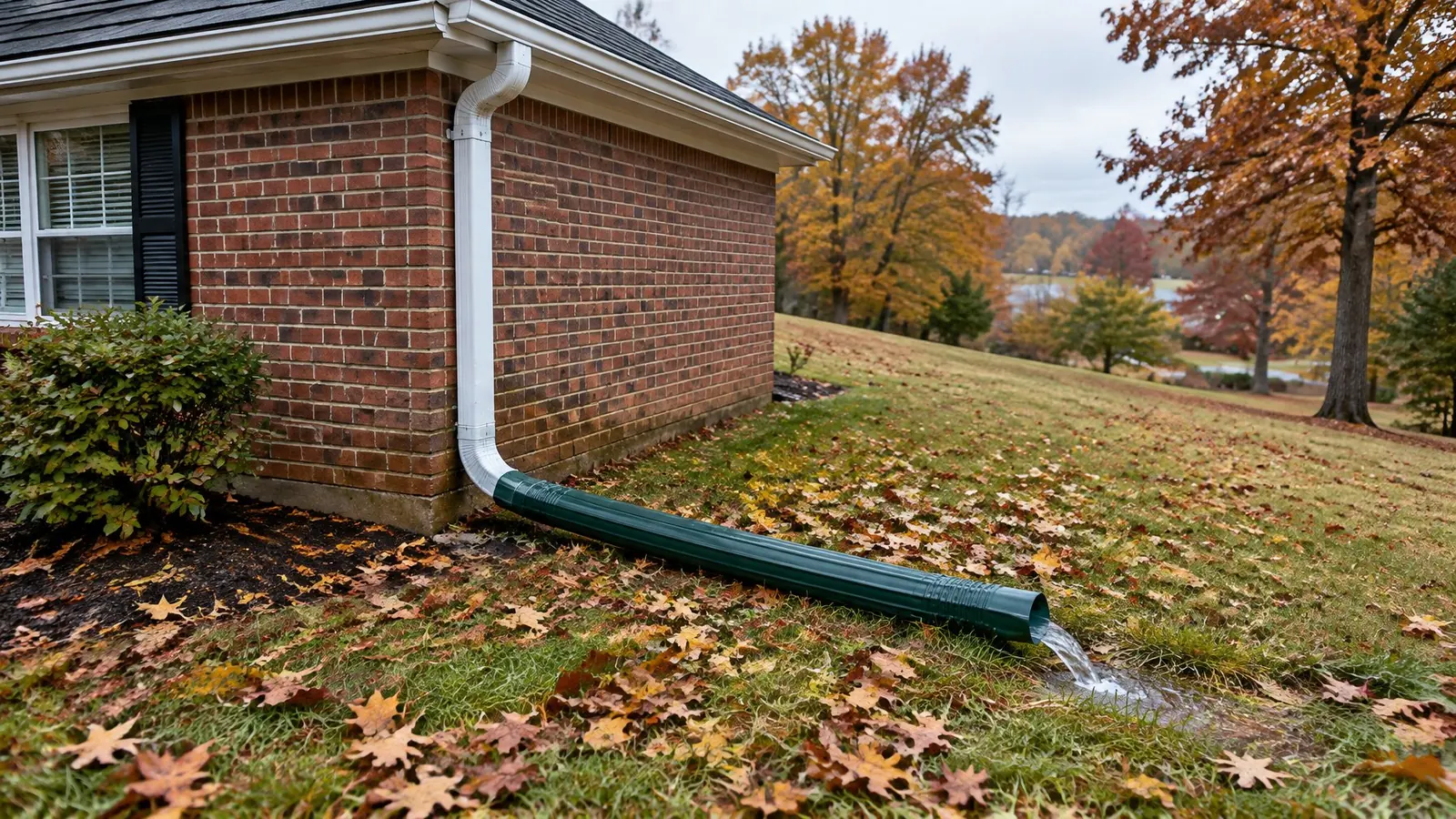
Twice a year: roof water
A roof sheds a great deal of water in a Chattanooga downpour, and the gutters decide where it lands.
- Clean gutters after the leaves are down in late autumn and again in spring.
- Check that every downspout is connected and discharges several feet from the wall, onto ground that slopes away.
- Look for stains or washed-out soil under gutter corners; they mark overflow points.
- Where an extension crosses a path, a buried pipe to a pop-up outlet is tidier and less likely to be kicked off.
Once a year: the ground around the house
Walk the perimeter. Soil and mulch should fall away from the wall, not toward it, and should sit below the siding or brick ledge. Flower beds built up over the years are a common culprit. On a hillside, check that the swale or shallow ditch on the uphill side still carries water around the house and has not filled with leaves.
Under Chattanooga's stormwater rules, keeping drains, swales and driveway culverts on your own land clear is the owner's job, and filling in a ditch or blocking a natural drainage path can leave you responsible for the flooding that follows.
Trees and shrubs
Large trees draw moisture from clay in dry weather, and their roots follow water toward foundations and drain lines. That is not a reason to cut down a healthy tree. It is a reason to think before planting a fast-growing one beside the house, and to mention any big tree near a cracked corner to the inspector.
Keep shrubs trimmed back far enough that you can see the foundation wall. A crack you cannot see is one you cannot track.
The crawl space
- Look inside with a flashlight after a heavy rain, at least once a year. You are checking for standing water and fresh mud.
- A plastic ground cover over bare soil keeps a great deal of moisture out of the framing.
- Fix dripping pipes and sweating ducts; a slow leak under the house does damage for years unnoticed.
- Keep the access door in good repair so that water and animals stay out.
- Do not store firewood or cardboard under the house. Both invite termites.
A simple way to watch a crack
If you have a crack you are unsure about, measuring it costs almost nothing and tells you more than guessing.
Mark it
Draw a short pencil line across the crack and write the date beside it. Mark each end of the crack too.
Measure it
Note the width at the widest point, or photograph it beside a coin.
Repeat with the seasons
Check at the end of a dry spell and again after a wet one, for a full year.
Act on change
A crack that has lengthened past your end marks, widened or offset is the one to call about.